13.5.11

PELEE AS GOOD AS EVER...

Kathi and I headed down to the park late morning in pursuit of a BELL'S VIREO. We joined up with Paul Pratt, Steve Pike, Mike Fitzpatrick, Sue Fortuna and several other good friends and took the new train down to the tip. After fifteen tense minutes, the yells went out from Steve and we were soon all enjoying fantastic views of this exceptionally tough bird. For Paul it was a new Canada bird, and for me it was only the second ever at Pelee.

We spent the rest of the afternoon enjoying some great low views of old familiar friends. One of the best photo opps was this male AMERICAN REDSTART. This is a common bird here but always a stunning bird.


We also looked for a reported KIRTLANDS WARBLER in the afternoon but the bird hadnt been seen in two hours and we had no luck in our quest. We left the park after dinner but made an abrupt U turn when Bruce Di Labio phoned to say the bird was back and performing well on the west beach. A few frantic moments later we were on the beach enjoying another great rarity. This was a female KIRTLANDS, but still a gorgeous bird.

15.4.11

FLORIDA - WEST COAST TO EAST COAST

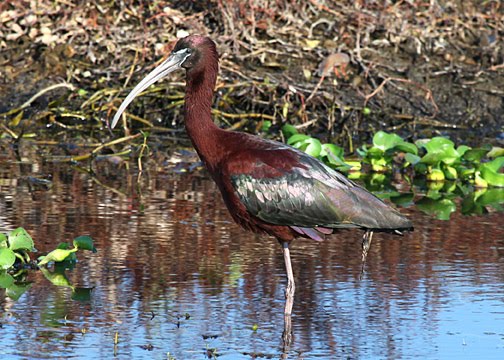
Today Kathi and I birded from Fort Myers Beach all the way across to the Wellington area. We finally got our RED-COCKADED WOODPECKERS! Other highlights included this GLOSSY IBIS, which although not all that rare, was unique because it was missing all its right foot and lower leg. Only a stump was visible and the wound appeared to be fairly fresh. We wondered whether it was a large turtle or an alligator?


At Okeeheelee Park we spent some productive time at the bird feeders. We tallied no fewer than 13 PAINTED BUNTINGS and 5 INDIGO BUNTINGS! Only two were adult male PAINTED BUNTINGS. There were at least 9 or 10 that were female type birds with one or two of these being much brighter green. The one below appeared to be a first year male because of the orangy red present on the lower breast!


The other exciting bird that appeared at the feeders was a female DICKCISSEL! We were thrilled to find this bird still lingering as it was expected to depart any day now.

FLORIDA - PEACEFUL WATERS


Today Kathi and I visited Peaceful Waters natural area to search for shorebirds and other waterbirds. Our main target here was LONG-BILLED DOWICHER. When we arrived I was disappointed to see that the water levels in the ponds had risen significantly. Nonetheless the back cell held a nice flock of dowitchers, plus both YELLOWLEGS, and many STILT SANDPIPERS.

Below is an image of one of the dowitchers. This is a LONG-BILLED.


Many of the dowitchers seemed to be paired off and were frequently seen having little scuffles about feeding sites.

FLORIDA - THREE LAKES AGAIN

We were in the Orlando area this morning and headed first to Brinson Park. Highlights here were both FULVOUS and BLACK-BELLIED WHISTLING DUCKS, LIMPKINS, and several SNAIL KITES. The male kite flew by within twenty feet of us carrying a snail!

At Three Lakes WMA we managed to hear loads of BACHMAN'S SPARROWS and then finally got two males to co-operate. They sang from close distance allowing great scope views. Below is a poor image of one of the sparrows.


In the Lake Placid area Kathi and I spent some time searching for the endemic breeding FLORIDA SCRUB JAY. This confiding bird showed off well allowing us to get some decent images.


In this photo the jay scolds us as we watch from a close distance. You can see he is colour banded as part of an ongoing long term study.

11.4.11

FLORIDA - THREE LAKES W M A


I spent most of today checking out Joe Overstreet and Three Lakes Wildlife Management Area south of Kissimmee. The landing at Joe O was not as productive as usual, but still lots of great birds. According to Rob, the airboat tour captain, the whoopers have moved south this year to around Lake Okeechobee. BTW - I recommend his tours. Have done them in the past with Kathi and he really knows where the birds are, and gets you great views.

In Three Lakes my main target was the endangered RED-COCKADED WOODPECKER. I was too late to see them leaving roost holes but managed to find a number of birds foraging. Here is a photo of one of pair that seemed to be searching for a nesting cavity. Note that this bird is colour banded (for identification) as all of the RCWPs are here.


As I entered the WMA it was apparent that hunting was in full swing (turkey season I think). At the entry gate one hunter was decked out in full gear leaning against the gate staring off into the forest with his shotgun in his arms and ready for anything that moved. He warned me to 'be careful' out there! Ironically twenty yards past him there was a NORTHERN BOBWHITE standing on a log right beside the road. I was really pleased to get what is certainly my best image of this bird.

9.4.11

FLORIDA - BURROWING OWLS


This morning Kathi and I took a short trip to look for BURROWING OWLS at Brian Piccolo Park near Pembroke Pines. It was certainly easy finding these great birds even in the heat of midday. At one burrow we came across one adult perched up in a tree.


At another burrow we watched a pair of owls interact by their nest burrow. What was presumably the male offered a blob of something to his mate. We weren't sure if it was nesting material or food, but the female readily accepted it.


6.4.11

POMPANO BEACH , FL - BEACH BIRDS


Kathi and I are enjoying some fun on the beach here in Pompano Beach, Florida. We took a walk down the beach with a point and shoot a few days ago and too some pics of gulls and terns and skimmers on the beach. The black line centre left are all skimmers, the terns at bottom left are mostly ROYAL TERNS with the odd LAUGHING GULL and RING-BILLED GULL. But what about that group of gulls on in the centre right of the photo????


Below is a closer shot of that group of gulls. If you look carefully you will notice there are fourteen birds in this group. There are three species represented here. So what are they?


I know. I know. They are pretty small in this image, so below is a close up showing two of the species. The third species is RING-BILLED GULL. One is pretty much hidden except a wing tip and the other near the centre is noticeably smaller. So what are the two species below?


The bird in the bottom left with really bleached and pale wing coverts is a first summer HERRING GULL. It is the ONLY herring gull in any of these images. All the other gulls (and there are ELEVEN of them!!!) are LESSER BLACK-BACKED GULLS of varying ages. Just a few decades ago this species would have been earth shattering news anywhere in North America, but today they are widely reported in numbers. The thing I found most surprising is that this group of LESSER BLACK-BACKED GULLS were the DOMINANT species in this gull flock. I had upwards of fourteen LBBGs at any one time on the beach and there was never more than three or four other gulls with the flock! The LESSERS age classes seemed to be 4 adult or near adult, 3 second summer, and 7 first summer birds. In the image below you can see a range of variation of birds in the group - all of these are LESSER BLACK-BACKED GULLS!